Digital Bloom: When Your Phone’s Wallpaper Becomes Your Main Character Energy
Okay, so picture this: you’re scrolling through your feed at 2 a.m., and every other fit check is serving some kind of ethereal, glitchy, almost-watercolor floral that looks like it was dreamed up by a sentient screensaver. That’s the energy, bestie. Digital Bloom isn’t just a micro-trend—it’s a whole mood board that’s crawling out of your OLED screen and into your real-life closet. Think holographic petals, pixelated vines, and the kind of garden that exists only in the liminal space between a VR headset and your grandma’s cottagecore fantasy. And honestly? It’s the perfect mashup for the Brooklyn/Boho girlie who wants to feel like a moss-covered fairy but also a cyber-sorceress, all while keeping her rent money intact.
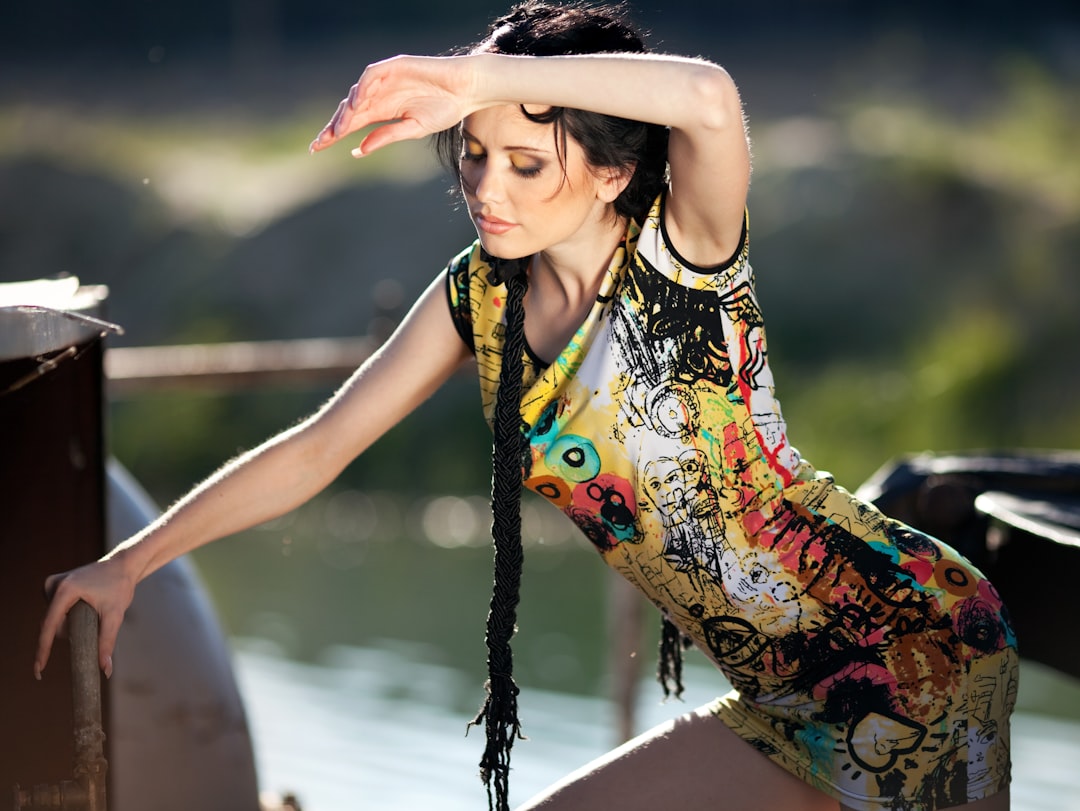
Let’s break it down without being cringe. Digital Bloom takes the organic, free-spirited essence of boho—the flowy silhouettes, the earthy texture, the whole “I just wandered out of a wildflower meadow” thing—and runs it through a soft-focus Instagram filter with a side of Y2K nostalgia. It’s not your mom’s floral print. It’s flora that looks like it’s melting, refracting, or being rendered in real-time by an AI that’s slightly too emotional. You’ll see it on sheer mesh tops, on thrifted denim jackets with embroidered pixels, on those chunky platform boots that somehow have a digital daisy motif. The vibe is less “garden party” and more “garden party in a dream sequence on a broken laptop.”
Why is this hitting so hard for our demographic? Because we’re the generation that practically lives in two worlds at once. We’re nostalgic for the tactile, the handmade, the thrifted—hence the RealReal obsession and the deep love for FreePeople’s prairie dresses that cost a paycheck. But we’re also chronically online, fluent in memes, and obsessed with the aesthetic of our own existence being filtered. Digital Bloom is literally the bridge. It validates that you can love a 2007 Motorola ringtone and a hand-woven basket bag at the same time. It’s hybrid fashion for hybrid souls.
Now, let’s talk about the balling-on-a-budget aspect, because that’s the real tea. You do not need to drop $300 on a designer piece that looks like it fell out of a simulation. The beauty of Digital Bloom is that it’s inherently a remix, which means it thrives on upcycling, DIY, and smart resale finds. Here’s the move: hit up The RealReal for that faded, oversized floral sundress that’s got a lovely worn-in energy, then take an iron-on transfer of a glitchy rose or a fractal fern and slap it on a thrifted bag. Boom—you’ve got a one-of-one piece that screams “I understand the digital subconscious.” Or, even better, find a pair of white sneakers that are a little too boring, grab some fabric paint, and doodle some corroded buttercups. It’s fast fashion in the sense that you’re creating newness without waiting for a drop, but it’s sustainable in the way that you’re not feeding the landfill beast. That’s what we call a “win-win” in a society that’s lowkey crumbling.
But let’s be real—Digital Bloom isn’t just about clothes. It’s about how you present yourself in the digital space, too. Your Instagram grid is basically your garden, and the algorithm is your soil. That means your posts should feel like they’re blooming from the same hybrid reality. Think photo dumps with a mix of real flowers and 3D-rendered petals. Think captions filled with emojis that don’t quite match the vibe, but somehow the disconnection makes it more cohesive. It’s about embracing the glitch as an aesthetic rather than a flaw. That oversaturated, slightly corrupted image of your sundress? That’s not a mistake—that’s a statement. You’re telling the world that you exist in both the natural and the digital planes, and you’re thriving in the overlap.
Here’s the thing though—this trend is also a callback to a simpler time, when we thought the future would be all flying cars and chrome, but instead it’s this weird, beautiful thing where a sunflower can look like it’s buffering. It’s soft where we expected hard, organic where we expected synthetic. It’s almost like we’re healing our tech fatigue by sprouting leaves through our keycaps. And for the 18-to-30 female crowd who’s juggling a hundred tabs—literally and metaphorically—Digital Bloom feels like a breath of fresh, pixelated air. It’s permission to be soft and sharp at the same time, to love a flowy skirt and a pair of chunky cyber goggles. It’s for the girl who’s thrifted a linen blazer and then pairs it with an LED necklace. You get it.
So how do you actually rock this? Start small. Maybe it’s a phone case with a liquid-paint flower on it. Maybe it’s a scarf that has a digital print like someone photoshopped a botanic garden into a CRT TV. Maybe it’s your nails—glazed with a chrome topcoat that shifts into muted lavender and sage. The key is intention, not perfection. You don’t need to go full cyborg. You just need to let your inner wildflower get a little bit of signal. That’s the whole mantra of Digital Bloom: nature doesn’t have to be analog, and technology doesn’t have to be sterile. They can mingle, flirt, and create something that feels utterly new but oddly familiar.
And honestly, at the end of the day, this trend is a mirror. It shows us that we’re not divided—we’re layered. We can hold a tarot card in one hand and a smartwatch in the other. We can cry over a sunset and then screenshot it to make it our lock screen. Digital Bloom is the fashion equivalent of that duality, and it’s only going to get bigger as we plunge deeper into 2026. So go ahead, walk into that Brooklyn bodega with your recycled nylon bag that has a holographic daisy on it. Or resell that weird, glitchy floral corset on The RealReal after you’ve worn it twice. This is our era, and we’re the flowers growing through the cracks of the concrete and the code.
Articles