

HRV-sensing bracelets
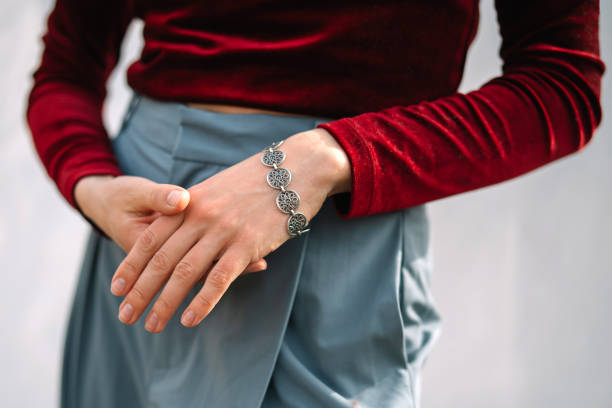
Let’s be real for a second: 2025 was the year we all got obsessed with “biohacking,” but mostly through grim-looking rings and clunky fitness bands that screamed “I just finished a Spartan Race.” Cute, but not cute. Now it’s 2026, and the wellness-industrial complex has finally gotten the memo that if you want us to wear a health tracker, it better match our thrifted blazer from The RealReal. Enter the HRV-sensing bracelet—the biometric accessory that’s blending smart fabrics with that effortless Brooklyn boho vibe you already have on your mood board. We’re talking about heart rate variability (HRV) tracking that doesn’t look like you’re on house arrest. It looks like you raided a vintage market in Williamsburg and found something that also happens to tell you when you’re about to burn out.
First, a quick brain dump on HRV because TikTok has definitely scrolled past this. Heart rate variability isn’t just how fast your heart beats—it’s the tiny fluctuations in time between each beat. High HRV usually means your nervous system is chill, your body is recovering, and you’re ready to take on the day with a cold brew and a clear head. Low HRV? That’s your system screaming, “I’m stressed, I slept like trash, and I’ve had too many $9 oat lattes this week.” Traditional trackers made you stare at a graph on an app, which is the opposite of vibey. But the new wave of HRV bracelets are woven into smart fabrics that literally feel like a second skin—soft, stretchy, and designed to blend into your layered aesthetic. No hard plastic. No ugly display. Just a subtle pulse of light or a texture change that signals your body’s rhythm without demanding you check your phone mid-conversation.
The real glow-up here is how these bracelets are marrying biometric fashion with the “less is more” energy that defines the 2026 style scene. Think of them as the jewelry equivalent of that oversized cashmere beanie you found at a pop-up market—an essential that also serves a function. Brands are now using conductive yarns and micro-sensors that are almost invisible, embedded into hemp-cotton blends, recycled polyester, or even upcycled silk scraps. You can get an HRV bracelet that looks like a delicate stack of gold-toned links but actually monitors your stress load while you thrift shop in Greenpoint. Or one that resembles a chunky leather cuff but alerts you when your HRV drops below your baseline—like a gentle, non-annoying friend who reminds you to breathe before you spiral. It’s the accessory equivalent of that “soft life” manifesto you keep pinning, but actually functional.
And here’s where the budget-friendly magic comes in. If you’re balling on a budget but still crave that upscale Free People energy, you don’t need to drop $500 on a luxury HRV band. Fast-fashion innovation has caught up with the tech. Smaller DTC brands are dropping HRV bracelets that start around $80—woven with smart fabrics that can sync to your phone via a minimalist app that doesn’t spam you with notifications. The fabric itself does the heavy lifting. Some are even washable, because nothing kills a boho vibe faster than a grimy wristband. You can wear it with a flowy midi skirt and a cropped cardi from your local vintage pile, and nobody will know you’re optimizing your parasympathetic nervous system. They’ll just think you’re accessorizing with intention. And honestly? That’s the vibe.
Of course, no Biometric Fashion piece is complete without a reality check. These bracelets aren’t FDA-approved medical devices, so you shouldn’t ditch your therapist or your sleep hygiene routine. They’re more like a stylish nudge—a wearable reminder that your body is talking, and it’s worth listening. The tech is still evolving, but the direction is clear: fashion that thinks. Smart fabrics that feel. Accessories that don’t just complete an outfit but complete a mood. In a world where we’re all trying to find balance between the grind and the glow, an HRV-sensing bracelet is the perfect middle ground. It’s chic enough to stack with your other finds, smart enough to make you rethink that third espresso, and affordable enough that you won’t feel guilty when you inevitably want to upgrade to the next iteration.
So go ahead, add one to your cart. Your 2026 self—and your nervous system—will thank you.