
Mending Your Fits Is the New Flex: Why Repairing Beats Replacing Every Time
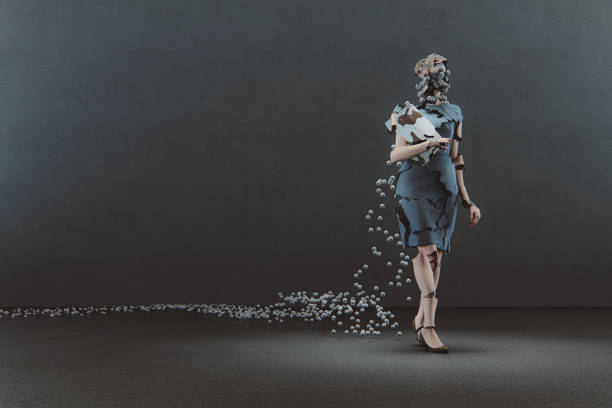
Okay, let’s be real for a sec. We’ve all been there—staring at a favorite pair of jeans with a ripped knee that’s almost too cute to toss, or a vintage tee that’s got a hole in a spot that’s definitely not intentional. In a world where Shein haul videos rack up millions of views and “fast fashion” is basically a dirty word, the idea of tossing something because it’s slightly imperfect feels… wrong. But what if I told you that the most chaotic, budget-friendly, and genuinely cool move for your wardrobe isn’t a shopping spree, but a sewing needle? Welcome to the era of the regenerative wardrobe—where mending isn’t just about fixing, it’s about flexing.
You see, regenerative style is the anti-take-make-waste vibe. It’s not just about recycling or thrifting (though those are still iconic). It’s about actively giving your clothes new life, over and over, until they’re basically part of your DNA. And the absolute easiest entry point? Learning to love a little rip, a loose button, or a faded hem. Instead of seeing a flaw, you see potential. That tear in your linen tank? That’s a future embroidery moment. A missing button on your blazer? Swap it out with one from a thrifted shirt and suddenly you’ve got a one-of-one conversation starter. This isn’t your grandma’s darning (though shoutout to grandmas everywhere—they were ahead of the curve). This is visible mending, and it’s been taking over TikTok and Instagram feeds for a reason. It’s permission to be messy, to be imperfect, and to own it with zero apologies.
Let’s talk money, because we’re all balling on a budget here. The RealReal taught us that luxury doesn’t have to mean full price. FreePeople taught us that boho looks can be layered and lived-in. But the real ultimate hack? Stopping the bleeding before it starts. A needle and thread costs like five bucks. A patch kit? Maybe ten. Compare that to a $60 “new” top from a fast-fashion site that’ll fall apart in three washes anyway. When you mend, you’re not just saving your fave pieces—you’re saving your coins for stuff that actually matters, like a weekend trip or a fancy iced matcha. And the vibe? Priceless. There’s something deeply satisfying about wearing a skirt you patched with a star-shaped piece of denim from a pair you cut up in 2022. Every hole tells a story. Every stitch is a little rebellion against the corporate fashion machine.
Now, I know what you’re thinking: “But I can’t even sew a straight line!” Honey, same. The beauty of regenerative mending is that it’s literally supposed to look DIY. You don’t need a sewing machine or a diploma from fashion school. You need a basic kit, a YouTube tutorial, and a willingness to embrace the jank. Try sashiko, the Japanese technique where you do simple running stitches in geometric patterns. It’s lowkey meditative, and the results are straight-up art. Or grab some iron-on patches with funky designs—mushrooms, stars, a little frog—and slap them over any flaw. If you’re feeling extra, start dyeing. A stained white tee? Dip it in some indigo or a pastel pink and suddenly it’s a whole new garment. The point is to get creative, to treat your wardrobe as a living, evolving thing instead of a collection of disposable shells.
But mending isn’t just about the physical act. It’s also about the mental shift from “I need new things” to “I can work with what I have.” That’s the heart of a regenerative wardrobe. It’s a cycle, not a line. You buy less, you repair more, and when something truly gives up the ghost, you shred it for cleaning rags or compost it if it’s natural fiber. You’re not just a consumer anymore—you’re a curator, a doctor, a little bit of a witch bringing dead things back to life. And honestly? That’s the most Brooklyn/Boho energy ever. Your style gains depth because it’s built on history, on your own hands, on choices that say “I care about my planet and my wallet.”
So next time you’re about to toss a faded floral midi or a cardigan with a snag, pause. Take a breath. Ask yourself what it could become. Maybe it becomes your new favorite thing because you fixed it. That’s the ultimate flex. That’s regeneration, baby.