The Art of the Directional Grunge Mix: Why Your Future Vintage Needs a Bite
There is a specific moment of euphoria that only comes from spotting a real 90s Hell Bunny slip dress at a Brooklyn stoop sale, its rayon creep barely visible under a layer of genuine thrift store dust. That moment, that tiny victory of the hunt, is not just about finding a cheap outfit. It is about securing a piece of a larger, more intentional narrative. For those of us who live in the space between The RealReal alerts and FreePeople markdowns, the concept of Future Vintage is not a trend; it is a financial and spiritual strategy. And within the vast, moody landscape of 90s Grunge Luxe, the most powerful position right now is not the perfect Doc Marten or the silkiest slip. It is the stolen, slightly awkward, completely intentional mix.
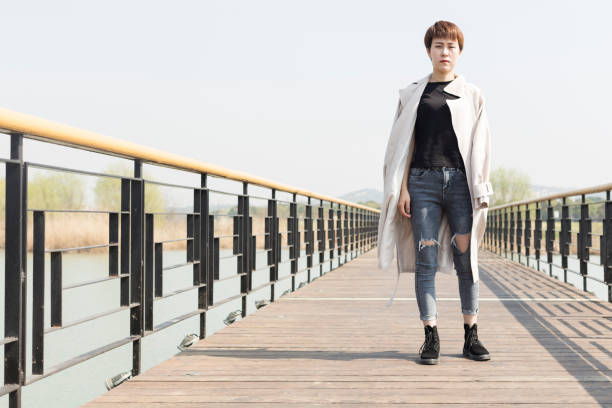
We have moved past the era of head-to-toe curated aesthetic. The girl who shows up in a full Rick Owens knockoff is not the vibe. The girl who matters is the one wearing a 1996 Delia’s catalog oversized flannel over a seventeen-dollar Amazon bodysuit, a Reformation-esque silk midi skirt peeking out from under it, and a pair of beat-to-death, genuine 90s Skechers platforms that she paid twenty bucks for at a Buffalo Exchange in Queens. That is the text. That is the tension that makes the look read as “knowing” rather than “costumed.” This is the core of Grunge Luxe in 2026: the friction between the deliberately distressed and the intentionally fine.
Think of it as the “Dusty Rose Mohair” principle. Mohair is inherently luxurious, a textural flex that signals you understand fabrication. But a dusty rose, a washed-out, almost-sad pink, carries the ghost of a previous owner’s closet. It is not a brand-new statement piece from Net-a-Porter. It is a piece that has lived, and that life is part of its value. To wear a dusty rose mohair sweater with a raw-hemmed, torn band tee is to create a conversation between the archive of a forgotten grandmother and the archive of a 1994 mosh pit. This is not about looking poor. It is about looking like you have access to depth, to history, to a personal library of fashion rather than a single, flat feed.
The archival buying end of this equation requires a specific kind of eye. You are not just hunting for a 90s slip dress. You are hunting for the slip dress that has a repaired strap, a tiny buckle, a neckline that dips just a little too low for a modern office. You are looking for the weird deadstock rayon from a brand that no longer exists, the cut that feels slightly off-kilter because it was designed before the era of the algorithm. This is where the “balling on a budget” part becomes a flex. A current designer slip might cost six hundred dollars. A vintage 90s slip from a label like Parallel or Necessary Objects? Thirty-five dollars on Depop, and it carries a cultural resonance that no new piece can manufacture.
But you cannot just wear the archival piece as a relic. That is museum behavior. The trick is to deconstruct its formality. Take that stunning, delicate, lace-trimmed slip dress. Do not wear it with heels. Wear it with heavy, dark, unhemmed denim cutoffs from a pair of men’s Levis you found at a thrift bin in Bushwick. Throw a chain wallet over it. Let the silk drag on the floor of the subway. This is the Grunge Luxe alchemy: you are borrowing the soul of a piece from the past, but you are forcing it to live in the context of your present chaos. The “luxe” comes from the fabric, the cut, the provenance. The “grunge” comes from your refusal to treat it with reverence. It is fashion, not a funeral.
This mindset protects you from the biggest trap of the fast-fashion cycle: looking dated. When you buy a piece from a current collection, you are locked into its specific trend window. When you buy an archival piece, a Future Vintage, you are buying into a silhouette and a texture that has already survived a trend cycle. A 90s silk charmeuse button-up will never look like a 2015 SheIn impulse buy. It will always read as intentional, as a reference. The key is to marry it with the least referential thing you own. Pair that archival charmeuse with a pair of perfectly plain, incredibly soft, low-rise wide-leg trousers from a transitional Zara line. The whole look becomes a study in contrast, a thesis on how we move through fashion.
The consumer who gets this right is not the one with the biggest budget. She is the one with the most patience and the most courage. She is willing to scroll through five hundred listings on a Tuesday night to find a weird, heavy, crocheted vest that might work perfectly with a mesh top and a skate pant. She is willing to spend forty dollars on a single pair of 90s silver hoop earrings because she knows they will outlive ten pairs of cheap metal ones. She is building a wardrobe that speaks in layers of time. The 90s Grunge Luxe future is not about replicating a look. It is about creating a feeling of “I found this, I saved this, and I will wear it until it falls apart, and then I will repair it.” That is the ultimate flex. That is the future of the archive.
Articles