
The Retrograde Reset: How Your Next Clothing Swap Can Save the Planet (and Your Wallet)
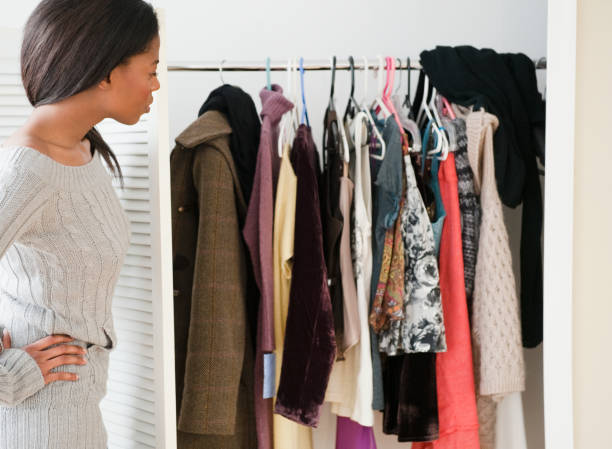
You know that feeling when you’re staring at a closet full of clothes and still have nothing to wear? It’s not just you—it’s the cosmic joke of the modern girlies who love Free People’s linen drops but also live by the mantra “balling on a budget.” The solution isn’t another H&M haul that’ll fall apart after three washes. It’s a clothing swap. Think of it as Tinder for your wardrobe: you match with a piece that actually sparks joy, and you ghost the stuff that’s been sitting with tags still on since 2023. Circularity isn’t just a buzzword—it’s the vibe shift we’ve been waiting for.
Let’s be real: thrifting has always been the go-to for the Brooklyn/Boho aesthetic. But lately, the thrift stores are picked over like a clearance rack at 8 AM on Black Friday. Prices are creeping up, and the curated piles of vintage Levi’s and silk camis are becoming harder to find without digging through racks of Shein rejects. That’s where the swap party comes in. It’s the ultimate act of closet circularity because you’re not just donating your old Zara dress to a bin where it might end up in a landfill in Ghana—you’re handing it directly to your friend who’s been eyeing it since you wore it to that rooftop birthday last summer. It’s intentional. It’s personal. And it costs zero dollars.
So how do you host a swap that doesn’t devolve into a chaotic pile of polyester heartbreak? Start with the guest list. Keep it tight—eight to twelve people max, all of whom actually have taste you trust. No one wants to walk away with a cousin’s old Forever 21 hoodie that smells like patchouli and regret. Set a vibe: think ambient lighting, a playlist that oscillates between Laufey and early 2000s R&B, and maybe a pitcher of elderflower spritz. The aesthetic matters because this isn’t a garage sale. It’s a communal wardrobe reimagining.
The rules are simple but non-negotiable. Each guest brings five to ten items that are clean, in good condition, and genuinely something they’d wear if it were their size or color. Encourage pieces that fit the Brooklyn/Boho ethos—flowy maxi skirts, chunky knit cardigans, vintage band tees, raffia bags, anything with a bit of fringe or an abstract floral print. Encourage them to include accessories too: that chunky belt you never buckle, the beaded necklace from an Etsy shop you forgot existed. The more variety, the better the alchemy.
Then comes the actual swap. Don’t just dump everything on a table and let people grab like it’s Black Friday. Do a “show and tell” round. Everyone holds up what they brought and tells a quick story—“this top was my go-to for third dates but now it reminds me of that situationship” or “I bought these linen pants on a whim and they’re two sizes too small but the pattern is chef’s kiss.” The storytelling makes the pieces more valuable. Suddenly that slightly faded sundress isn’t just a piece of fabric—it’s a relic of someone’s summer fling, and you want to give it a second life.
After the show, let the chaos commence. The key is to make it feel like a curated boutique, not a rummage sale. Set up racks by category: tops, bottoms, dresses, outerwear, accessories. Have mirrors handy, maybe a full-length leaning mirror with good lighting for the selfies. Let people try things on over their existing fits. The best part? When someone finds something that fits perfectly, the whole room gasps. It’s like witnessing a thrift miracle.
But here’s the hack most people forget: the leftovers. You’ll have items that don’t get swapped. Don’t just bag them up for Goodwill (which, let’s be real, often overcharges or ships them overseas). Have a designated “free pile” where guests can take whatever they want for their own friends or to upcycle. Denim jackets can become patchwork projects. Silk scarves can become headbands or bag wraps. Anything beyond saving? Textile recycling. There are services like Retold or ThredUp’s cleanup bag that take worn-out clothes and turn them into insulation or road filler. Circularity doesn’t end at the swap—it extends to the last fiber.
The real magic, though, is the shift in mindset. When you swap, you stop seeing clothes as disposable. That linen dress you snagged from your friend’s pile? It now has a history. It’s been to a party, a flight to Lisbon, a coffee shop in Williamsburg. And now it’ll make new memories with you. You also start noticing how much fashion is a cycle—literally. The crochet top your mom wore in the ’90s is back. The wide-leg jeans you almost donated are suddenly trending. Circular closets mean you never have to buy into the hype of a new trend because it’s already hanging in your friend’s closet.
So go ahead, send that group chat. Invite your most stylish friends. Brew some iced matcha. And watch as your wardrobe becomes a living, breathing ecosystem of swap-aesthetics. Sustainable style isn’t about deprivation—it’s about circulation. And honestly, nothing says “I’m a bad bitch who cares about the planet” like walking into a brunch wearing your bestie’s old top, paired with vintage thrifted jeans, and a bag you traded for a candle. That’s the real flex.
Articles